Posts

Exploring the Origins of Big Sur's Enigmatic Seafloor Pockmarks

Image
Off the coast of Big Sur, California, lies a fascinating underwater landscape marked by large holes in the clay, silt, and sand. These pockmarks, discovered decades ago, have long puzzled scientists. Recent research by the Monterey Bay Aquarium Research Institute (MBARI) and Stanford University has shed new light on their formation. The Sur Pockmark Field, the largest of its kind in North America, spans an area equivalent to Los Angeles and contains over 5,200 hollows, each measuring up to 175 meters wide and 5 meters deep. These pockmarks are found at depths ranging from 500 to 1,500 meters. Unlike typical pockmarks formed by the release of methane or other fluids, the Sur Pockmarks appear to be shaped by gravitational forces. Analysis of sediment samples indicates that sediment has flowed down the continental slope intermittently for at least 280,000 years, with a significant flow occurring 14,000 years ago, likely triggered by an earthquake or slope collapse. This process erodes the...

The Ocean's Salty Secret: How Underwater Mixing Shapes Surface Salinity

Image
Ever wondered why the ocean is salty? Unlike a bowl of soup, the ocean doesn't get its saltiness from a giant salt shaker in the sky. The answer lies in a fascinating interplay between land, seafloor, and even volcanoes! There are two main sources of ocean salt: 1. Land Runoff: Rainwater acts like a tiny sculptor, slowly eroding rocks on land. These rocks contain various minerals, including some that dissolve easily in water, forming ions (charged particles). These ions get carried away by rivers and streams and eventually end up in the ocean. While some of these ions are used by ocean life, others accumulate over time, making the ocean saltier. 2. Seafloor Vents and Volcanoes: Deep down on the ocean floor, things get hot! Superheated water seeps through cracks and gets cooked by Earth's molten core. This heat triggers a series of chemical reactions, dissolving metals from surrounding rocks and releasing them into the water, along with other minerals. These "hydrother...

Antarctica Sea Ice Mystery? The Truth Behind the Enormous Ice Gap

Image
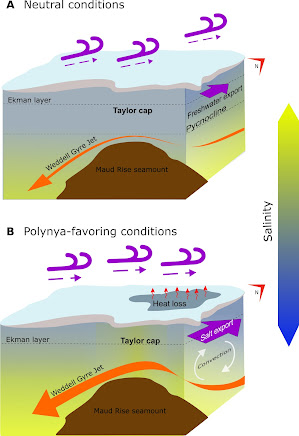
Scientists have discovered evidence for the open-ocean polynya formed over the Maud Rise, in the Wendell Sea, during the winters of 2016-2017. The study reveals the key process on how the polynya was able to form and persist for several weeks. The team of researchers from the University of Southampton, the University of Gothenburg and the University of California San Diego studied the Maud Rise polynya. They found that the polynya was brought on by interactions between the wind, ocean flow and geography resulting in vertical missing of the heat and salt towards the sea surface. Polynyas are openings in the winter sea ice that act like giant vents, exposing the warm water below to the freezing air above. Coastal Polynyas are regular visitors along the Antarctic coast where strong winds push sea ice away from the land, creating open water. Open-Ocean Polynyas are rare events that occur in the middle of the Southern Ocean. They are often linked to changes in the ocean's saltiness, w...

Deep-Sea Explorers Spot Rare Creature: Dumbo Octopus

Image
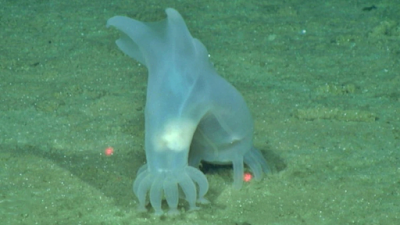
A rare sighting of a Dumbo octopus and new research published on these creatures have made headlines in recent months. The Dumbo Octopus is a rare creature that lives in the deep sea. In September 2023, a deep-sea expedition led by National Oceanic and Atmospheric Administration spotted this creature about a mile below the Pacific Ocean. The sighting is rare because usually this creature can be seen at a depth of 13000 feet. The scientists were able to film the octopus, and the footage shows the creature swimming gracefully through the water. Researchers from the Ocean Exploration Trust and NOAA captured footage of a Dumbo octopus on an unnamed seamount in the Papahānaumokuākea Marine National Monument, northwest of Hawaii. Dumbo octopuses get their name from their two large ear-like fins, which resemble the ears of the Disney character Dumbo.

Dead Whale's Decomposition Creates New Home for Marine Life

Image
A sperm whale that died of natural causes has become a flourishing habitat for marine life after sinking to the ocean floor off the coast of California a decade ago. The whale's decomposing body has become an abundant source of food for various marine creatures such as fish, crabs, and other invertebrates. The whale's skeletal remains have evolved into a stable ecosystem in an otherwise dynamic ocean environment. Moreover, the whale's death and decomposition have produced a distinctive ecosystem. Various bacteria and microbes residing in the whale's body have played an essential role in breaking down its tissue. As a result, these microbes have contributed to the ocean's food chain and recycled nutrients back into the water. Scientists have also found great value in studying the whale's bones, which provides insight into its life and death. This research has enabled scientists to understand better the ocean's ecosystem and whales' role in it. The dead wh...

Blade Runner: The Badass Whale

Image
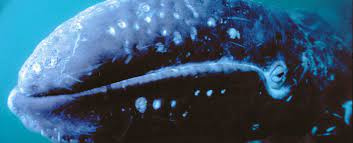
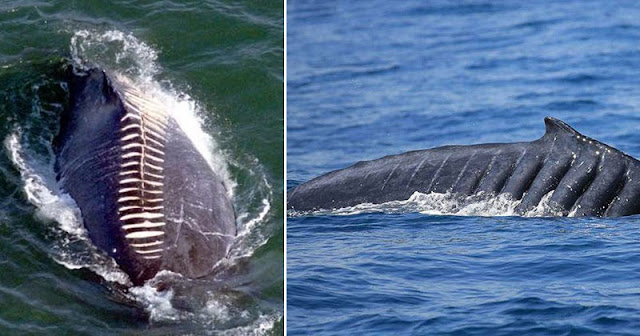
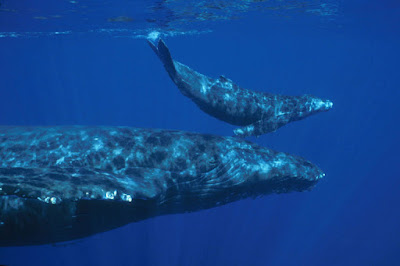
In 2001, a humpback whale was cut by a boat propeller in Sydney, Australia. The 30-centimeter-deep scars are still visible along her side today, but this whale has defied the odds and survived. She is known as Blade Runner. Blade Runner was first seen in the waters off Sydney in 2001. She was swimming with her calf when she was struck by a boat propeller. The impact was so severe that it caused her to bleed profusely. She was also left with a number of deep scars, including one that runs the entire length of her side. Despite her injuries, Blade Runner survived. She was able to swim away and rejoin her pod. In the years since, she has been seen repeatedly in the waters off Sydney and New South Wales. She has even been spotted as far away as Tasmania. Blade Runner's story has also helped to raise awareness of the dangers that whales face from boat strikes. Each year, hundreds of whales are injured or killed by boats. Blade Runner is a reminder of the importance of taking steps to pr...

Experiencing Georgia Aquarium

Image
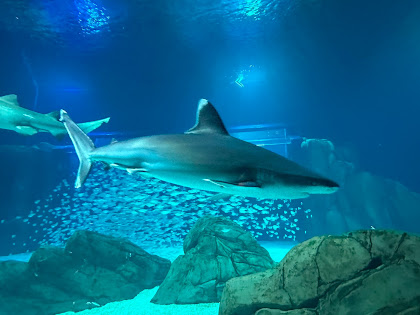
Hey there, I'm Mounika and I'm here to talk about the most magical and engaging place Georgia aquarium  No matter your age, everyone is a kid at Georgia Aquarium . Home to the most amazing aquatic animals, including beluga whales, whale sharks, manta rays, penguins, sea otters, dolphins and many more. Whether it may be dolphin show or sea lion presentation or entering the zone of Predators of the Deep, everything is amazing at Georgia aquarium. Filled with 11 millions gallons of water in seven permanent galleries making home to over 100,000 animals.  The Georgia Aquarium is divided into 7 sections: Coldwater Quest, Ocean Voyager, Tropical Diver, Georgia Explorer, River Scout, Predators of the Deep and Dolphin Tales. Ocean Voyager is the largest exhibit with 100-foot underwater tunnels and one of the largest viewing windows.  There's so much to see in Georgia Aquarium. I spent half a day roaming and getting mesmerized by the amazing creatures. Located in Downtown Atlanta a...

World's Deepest Fish Ever Filmed

Image
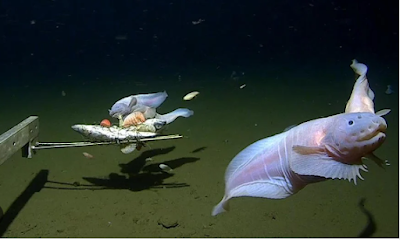
A research expedition to explore deepest-sea creatures led to the discovery of the deepest fish ever filmed. In August 2022, a two-month expedition to the deep trenches around Japan in the north Pacific Ocean undertook by the research ship DSSV Pressure Drop.  As part of a 10-year study into the deepest fish populations in the world, the mission was to explore the Japan, Ryukyu and Izu-Ogasawara trenches at 8,000m, 9,300m and 7,300m deep respectively. Founder of the Minderoo-UWA Deep Sea Research Centre and chief scientist of the expedition, UWA Professor Alan Jamieson, worked with a team from the Tokyo University of Marine Science and Technology to deploy baited cameras in the deepest parts of the trenches. At a depth of 8,336m in the Izu-Ogasawara Trench, south of Japan, the team managed to film the deepest record of a fish, the unknown snailfish species of the genus Pseudoliparis.  A few days later, the team collected two fish in traps from 8,022m deep in the Japan Trench. ...

Did primitive cetaceans feed like marine reptiles?

Image
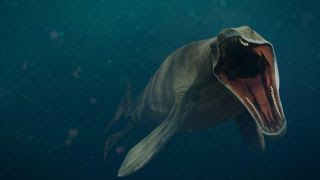
Did the first whales pick up where the mosasaurs left off when 66 million years ago all the large marine predators became extinct? The University of Liège's EDDyLab (Belgium) developed this research to investigate whether there were morphological and behavioral convergences between whales and mosasaurs which was published in Paleobiology. We are familiar with modern whales and dolphins, but the extinct predecessors of these modern marine animals closely resembled ancient aquatic animals, especially the mosasaurs, a group closely related to snakes and lizards. "Superficial similarities have long been noted, but the idea that these two groups might be functionally similar has never been rigorously tested," explains Rebecca Bennion, a doctoral student at ULiège's EDDyLab and first author of the study. The research, which has just been published in the journal Paleobiology and was carried out by an international team of scientists based in Europe, the USA, and New Zealan...

Do Noises affect Life on the sea floor?

Image
Countless marine animals rely on noise to survive, for e.g: to detect predators, for echolocation, and as a means of communication with the co-species. In recent decades, the sounds caused by human activities are affecting marine species, especially the sounds emitted by cargo ships, loud explosions, and seismic surveys. A study by the Alfred-Wegener institute showcases that the sounds may impact the functioning of the ocean floor. Invertebrates such as mussels, crustaceans, and worms(referred to as ecosystem engineers) frequently sediment the area they live in by burrowing, feeding, aerating, and fertilizing with their excreta. These activities play a vital role in the nutrient cycle in the ocean, allowing more carbon from the dead organic material to be stored on the sea floor and nutrients to be recycled.  Sound can travel long distances underwater, sometimes hundreds and even thousands of kilometers whereas light can travel only tens of meters.  A research team from the Al...

UK Scientists Found 30 Potential New Species At The Bottom Of the Ocean

Image
Natural History Museum unlocked 30 new species living at the bottom of the sea. Using a remotely operated vehicle collected specimens from the abyssal plains of the Clarion-Clipperton Zone in the Central Pacific. Previously, creatures from this area had been studied only through photographs.  What surprises is out of 55 specimens recovered, 48 of them were new. The animals include segmented worms, invertebrates from the same family as centipedes, marine animals from the same family as jellyfish, and different types of coral. 17 were found at between 3,095 and 3,562 meters deep, two were collected on a seamount slope at 4,125 meters, and Thirty-six specimens were found at more than 4,800 meters deep. Dr. Guadalupe Bribiesca-Contreras, of the Natural History Museum, the study’s lead author said “the research is important not only due to the number of potentially new species discovered but because these megafauna specimens have previously only been studied from seabed images and added...

Sea Urchins in the Mediterranean Sea can Withstand Hot, Acidic Seas

Image
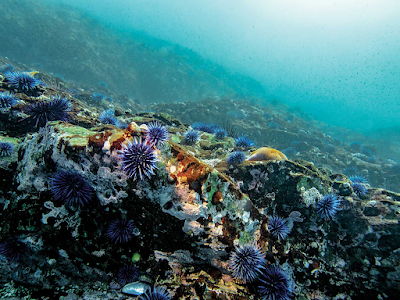
In bubbling vents off the coast of Ischia, a volcanic island in the Gulf of Naples lives a curious population of black sea urchins. For at least 30 years, they have lived in these low pH, carbon dioxide-rich environments -- a proxy for climate change-induced acidic oceans. Now, University of Sydney researchers have determined they can also tolerate unprecedentedly warm sea temperatures -- another climate change by-product. This means that these urchins, already one of the most abundant animals in the Mediterranean Sea, will likely plunder further afield as oceans continue to warm and become more acidic. The researchers have described their findings in Biology Letters, a publication of the Royal Society. The Mediterranean Sea is warming 20 percent faster than the global average, with predicted warming of up to 5.8°C by 2100. "Given their ability to withstand a large temperature range, these sea urchins are likely to continue spreading throughout the Mediterranean Sea, with serious ...

Scientists Confirms the Orcas Kill the blue Whale For the First Time

Image
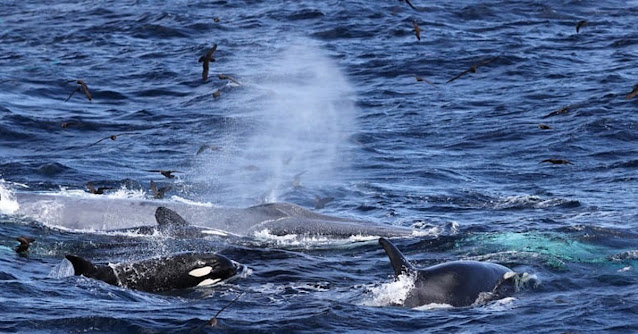
Killer whales don't hesitate to hunt from herring to great white sharks. For the first time, gory footage reveals that orca pods can even bring down an adult blue whale. While past reports reveal that they were attempted attacks on blue whales, no one has observed orcas complete the job until March 19th, 2019. The series of events has been taken off on the southwestern coast of Australia from 2019 to 2021. The three separate attacks were described in the journal Marine Mammal Science. “This is the biggest predation event on the planet,” says study coauthor Robert Pitman, a cetacean ecologist to Science News’s Anna Gibbs. “We haven’t seen things like this since dinosaurs were here, and probably not even then.” In each attack, the orcas—also called killer whales—relied on strength in numbers. Between 50 and 75 orcas took part in each hunt, and more than a dozen of the same individuals were involved in all three events. The orcas employed different tactics to take down the whales, inc...

Researchers Find the World's Deepest Dwelling Squid

Image
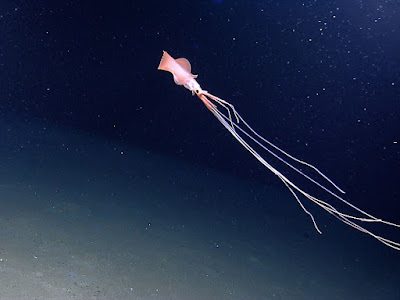
When a team of subsea explorers completed the deepest ever dive to a shipwreck earlier this year, the news was broadcast around the world. A team from Caladan Oceanic found the USS Johnston , which sank during an intense naval battle in 1944, to be astoundingly well-preserved, its guns still pointing in the direction of the enemy. A few days before making their record-setting trip, however, the explorers had carried out another descent to the seafloor, a dive that ended up being a few kilometers off the mark. Though they failed to find the wreck that day, they did find something else. Once footage from the excursion came in, Alan Jamieson, a deep-sea researcher from the University of Western Australia, sat in his office aboard the expedition ship scrolling through frame after uneventful frame, searching for anything that might be of interest. The two-person submersible, piloted by Victor Vescovo, the American investor who founded Caladan Oceanic, appeared to have glided past little mo...

Decapitated Sea Slugs can Regenerate a New Body When Under Threat

Image
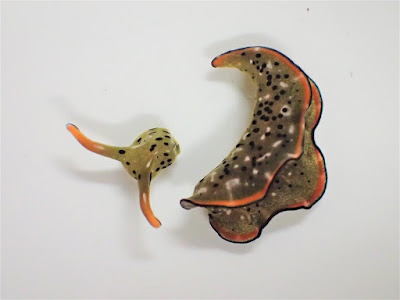
Even though self-decapitating is a sure way to die, some species of sea slugs chop off their head which is a life-saving exploit for them. Scientists discovered that slugs do this to remove internal parasites that have infested their bodies. The new ones will be generated from the head that has been detached. This degeneration takes about three weeks, during which time the growing slugs likely sustain themselves off sugars produced via photosynthetic algae that live within their skin.  Biology researcher Sayaka Mitoh, who specializes in Japanese sea slugs, one day entered the lab to find one of the creatures had decapitated itself and the head kept on moving and living. Then a couple more followed same. Then Ms Mitoh teamed up with Yoichi Yusa, an aquatic ecology professor to perform the phenomenon. They have cut off the heads of 16 japanese slugs of two different species. Out of which six have been regenerated and 3 of them have been succeeded and survived. One of them has decapit...

First Map of World's Coral Reefs

Image
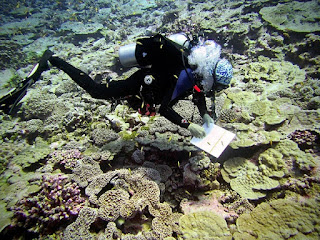
Scientists have completed the first map of the world's coral reefs to monitor and conserve an ecosystem that facing the threat of destruction by human activities and climate change. The Paul Allen Atlas combines over 2 million images using the local reference data to create a high-resolution map of coral reefs. The map provides a better way to understand and protect increasingly threatened coral reefs. Nearly 98000 square miles of coral reefs have been mapped up to the depth of 50 meters. It also collects data about the seafloor and ocean that interacts with the coral reefs, including wave turbidity and the presence of rocks and sand. “There are countries, organizations and government agencies in the world that don’t have a map of their reefs […] so these maps will help people by basically giving a baseline to better assess where the action is needed,” says marine scientist Chris Roelfsema, who led the mapping process for the Allen Coral Atlas, to Mongabay . “We can better make pl...

Mermaid: Is It Fact Or Fiction?

Image
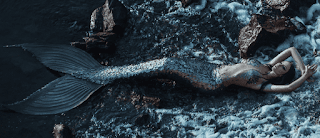
Stories have been told for centuries and have been depicted across the world. This mythical sea creature often described as half-human and the other half with a fishtail. Many writers and artists have plagued efforts to bring life to this enormous beauty. Some even claim today, that they are present. An incident in Hawaii dazzles the tourists with an image of half-human and half-fish. When a group of people went on a dive near the "Kaiwi Point Mermaid", the diver master "Jeff Leicher" encountered a nude woman with long flowing hair and beautiful faces. He immediately captured the photo but it broke the surface and swam away. The photos have been investigated by the experts and say that they are genuine and have not been tampered with. In ancient history, mermaids depict both good fortune and disaster. Many legends have been revolved around this beauty. In Africa, tales exist about mythical water spirits called Mami Wata - Mother Of Water. A water spirit often accom...

Blue holes: Hotspots of Microbial Diversity

Image
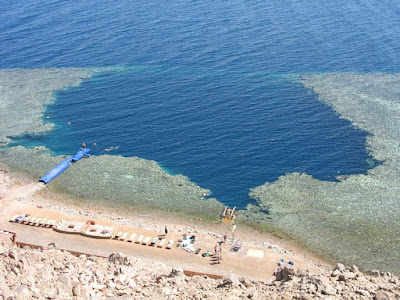
Blue hole is a marine sink hole formed during the ice ages due to erosion of lime stones terrains of rain and chemical weathering. In the later ages, sea levels have been raised and filled them with water. Some of these blue holes are immersed underwater makes them difficult to understand. Inside the blue holes, oxygen is scare and very little light is present only near the surface. Which tells that the species formed inside these blue holes use very less oxygen . In fact, some of the species use sulfate for photosynthesis. This makes us to learn how Earth has been millions of years ago without oxygen. This also helps us to know how life will be on other planets. But due to lack of accessibility and abundance, little is know about these holes. Some sink holes are several meters down, and for most of them the opening is very small. This makes a manual expedition necessary. But in the last years, almost 130 - 150 divers have died at an Egyptian blue hole. The great blue hole is the large...

It's My Blog's 1st Birthday

From ideas to creating, writing to editing, it's worth everything when I see my blog. It's been a year I created it, where I turned my passion for the ocean into a stream of words. Happy 1st birthday my baby blog.

What Gives More Oxygen on Planet Earth?

Image
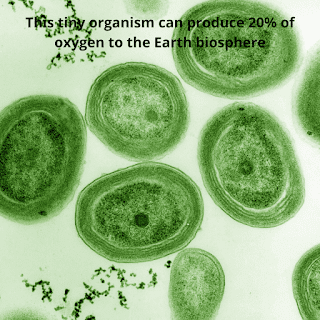
Everybody knows that plants and trees produce oxygen for the earth. But, do you know that oceans and seas contribute more oxygen. Produced by marine plants, algae and single-celled organisms called phytoplankton. These may not be seen by the naked eye but produce more, which is not even close to the proportions produced by the trees and plants. The ocean produces oxygen as a by-product of photosynthesis, which converts sunlight and carbon dioxide and can use as energy. One type of plankton, Prochlorococcus releases tons of oxygen into atmosphere. So small, that can millions can be present in a single drop of water. It produces 20% of the oxygen to the earth biosphere, which is more than the rainforests on land combined. Scientists mention that a single cell can give oxygen for one in every 5 breaths we take. Calculating the amounts of oxygen on oceans may vary because of the change in climate conditions, geographic location and with the tides. It is also important to remember that the...